Thursday, February 1, 2007

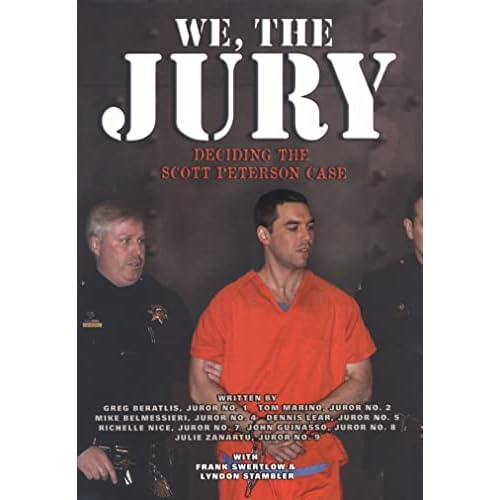
We, the Jury

We, the Jury: Deciding the Scott Peterson Case by Jury Members, Frank Swertlow, and Lyndon Stambler (2007)

Like many people, I avidly followed the Laci Peterson story and her husband's trial. I hoped this book would reveal greater detail about the evidence and the thought processes of the jurors. I was disappointed that it seemed mostly to focus upon the personal dynamics of the jury and the opinions of individual jury members. I'm sorry to say that We, the Jury may also be the worst written book I've ever read. Better books about the trial are A Deadly Game: The Untold Story of the Scott Peterson Investigation by Catherine Crier, and Blood Brother: 33 Reasons My Brother Scott Peterson Is Guilty by Anne Bird.

Julie & Julia

Julie & Julia by Julie Powell (2005)

Julie & Julia came out of a year long cooking/blogging experiment by Julie Powell. Approaching 30 years old, she looks for a project to focus upon and decides to work her way through Julia Child's Mastering the Art of French Cooking in one year's time. I can't say it was a great book and certainly didn't capture food in the manner of Ruth Reichl, but it was a decent way to pass the time on the train to and from work.

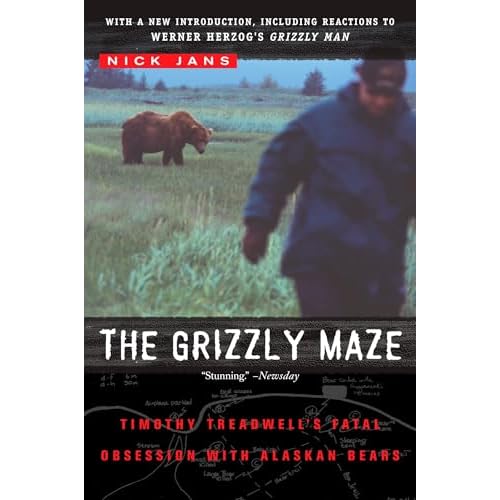
The Grizzly Maze

The Grizzly Maze by Nick Jans (2006)

I was fascinated by Timothy Treadwell's mauling death by grizzly a couple of years ago and saw the movie pieced together from the footage he shot in Alaska. The Grizzly Maze is a nonjudgmental look at Treadwell's life based upon interviews with his supporters and his detractors alike. I still don't know what to make of him, but I know a lot more about bears now! I hope never to encounter any of the black bears that live in the mountains near my home. I must say I'm a lot less inclined to explore those mountains now.

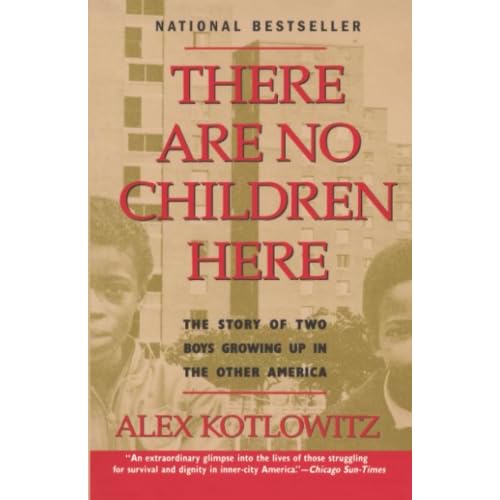
There Are No Children Here

There Are No Children Here by Alex Kotlowitz (1991)

I don't have Chris' critiquing ability, so I won't attempt a review in his manner. I will say, however, that this is a great book. There Are No Children Here should be required high school, if not junior high, reading. I grew up not too far from Chicago, and my father once drove us into one of the projects on accident. I can't remember wanting to get out of any other place more than I did that one! This book gives true insight into what it is like to actually live in one of those projects and to try to eke a childhood and/or family life out of that bleak existence. My biggest surprise was that, in all the poverty of the Henry Horner Homes, the mother of the children featured in this book continued to have hopes of a better life for her children. Her younger boys Pharoah and Lafayette are wise beyond their years, but the essence of their childhood lives on. An eye-opening read.

Friday, January 19, 2007

Pattern Recognition

Pattern Recognition by William Gibson (2003)

I was very impressed with Gibson's Neuromancer. You can't watch the Matrix Trilogy and miss the sundry notions lifted from this seminal '80s book.


To my knowledge, Gibson was the first writer to fuse the paranoid, "fluid-concurrent reality" concepts of Philip K. Dick with futurist projections of a cyber-tendrilled world. Pattern Recognition, however, is not a cyberpunk novel, the sci-fi sub-genre Gibson's credited with originating. It doesn't take place in an imagined techno-future. Rather, it poses a possible techno-present, its material extrapolated from current world content. It's speculative fiction written about today. If White Noise is a contemporary novel in the broad sense, then Pattern Recognition is one in the narrow.

Quick plot lowdown:

Time: Post 9-11. Protagonist Cayce Pollard is a cool hunter. She's hired by top ad agencies to identify popular trends on the cusp of emergence. She gets a unique assignment: find the creator of a series of anonymous video clips -- a sort of hermetic exemplar of viral marketing -- circulating the web. She takes the job. Cosmopolitan espionage ensues.

Quick thoughts:

Gibson is a great sentence spinner. You can almost forget that, like Neuromancer, Pattern Recognition is ostensibly a thriller. It's upholstered with esoteric techno reference and heady concepts like pop-market-culture-as-world-humanity-network, but still a spy tale, replete with the usual Gibson tropes (e.g., foreign mafias, Japanese fetishism, underground cabals, etc.). Those attributes weren't a detriment to Neuromancer. It helped to have a familiar framework to counterbalance the more abstruse concepts like cyber-consciousness. Pattern Recognition, without the heady, prescient futurism, however, is less compelling a read.

That's not to say Recognition doesn't have interesting observations. It presents our media-influended global culture from its two polar impetuses: multi-million-dollar corporate-funded, ubiquitous branding and free, grass-roots guerilla media. And it manages to merge them together in a mobius strip sort of way.

Friday, January 5, 2007

White Noise

White Noise by Don DeLillo (1985)

After Seize the Day, I wanted to dig into a more contemporary narrative.

An old friend had always raved about this book. There's a section where the hero relates his transcendent well-being after conducting a successful ATM transaction. My friend found it astute and funny.

Quick plot lowdown:

Dark comedy set in the '80s. Hero Jack Gladney is a liberal arts prof who teaches Hitler studies, a curriculum he devised to colleague acclaim. After three failed marriages, he's finally settled into what feels like a happy life pillowed by suburban consumerism, pop media infusion and the ubiquity and convenience of electronic culture. Then, an industrial accident occurs. And it threatens all sense of safety these constructs once formulated.

Quick thoughts:

Not a novel with dense plot convolution; the above synopsis covers much of the story, shy its third-act thriller element. It is, however, a well-observed depiction of "comfortable" American life, saturated by technology, trivia and other cultural contrivances that detach us from mortal questions.

White noise is, of course, the indistinct wash of din that surrounds us. It's also used to mask other sounds. For example, casinos pump in white noise to cancel out room noise -- a fire-to-fight-fire kind of technique. This book tries to illustrate that the white noise that is our domestic lives is only simulacra shielding us from Real Life and Real Death confrontations.

Not really as heady as it sounds. "Fear of death" themes.
Thursday, January 4, 2007

Dan Dan Noodles

Recipe from Food and Wine magazine:

Dan Dan Noodles

TOTAL TIME: 35 MIN
SERVES: 4
Joanne Chang, owner of Flour Bakery + Café in Boston, will set aside her rolling pin to make stir-fries and noodle dishes like this peanutty dan dan at a second restaurant, due to open this summer.
ingredients
  • 1/4 cup peanut oil
  • 1/2 cup raw peanuts
  • 1 small jalapeño, minced
  • 1 small garlic clove, halved
  • One 1/4-inch slice of fresh ginger, peeled and chopped
  • 2 1/2 tablespoons soy sauce
  • 2 tablespoons water
  • 1 1/2 tablespoons rice vinegar
  • 1 tablespoon Sriracha chile sauce
  • 1 tablespoon sugar
  • 1 teaspoon Asian sesame oil
  • Kosher salt
  • 12 ounces chow mein noodles
  • Cucumber matchsticks, sliced scallions, chopped cilantro, sesame seeds and lime halves, for garnish
directions
  1. In a large skillet, heat the peanut oil. Add the peanuts and fry over moderate heat until golden, about 8 minutes; let cool slightly. Transfer the peanuts and oil to a food processor. Add the jalapeño, garlic and ginger and process until minced. Add the soy sauce, water, rice vinegar, Sriracha, sugar and sesame oil and process until smooth. Season generously with salt.
  2. In a pot of boiling salted water, cook the noodles until al dente. Drain and rinse under cold water; pat dry. Toss the noodles with the dressing and mound in serving bowls; top with the garnishes and serve.
WINE A dry, vibrant, fruity rosé: 2005 Marqués de Cáceres Rioja Rosado.